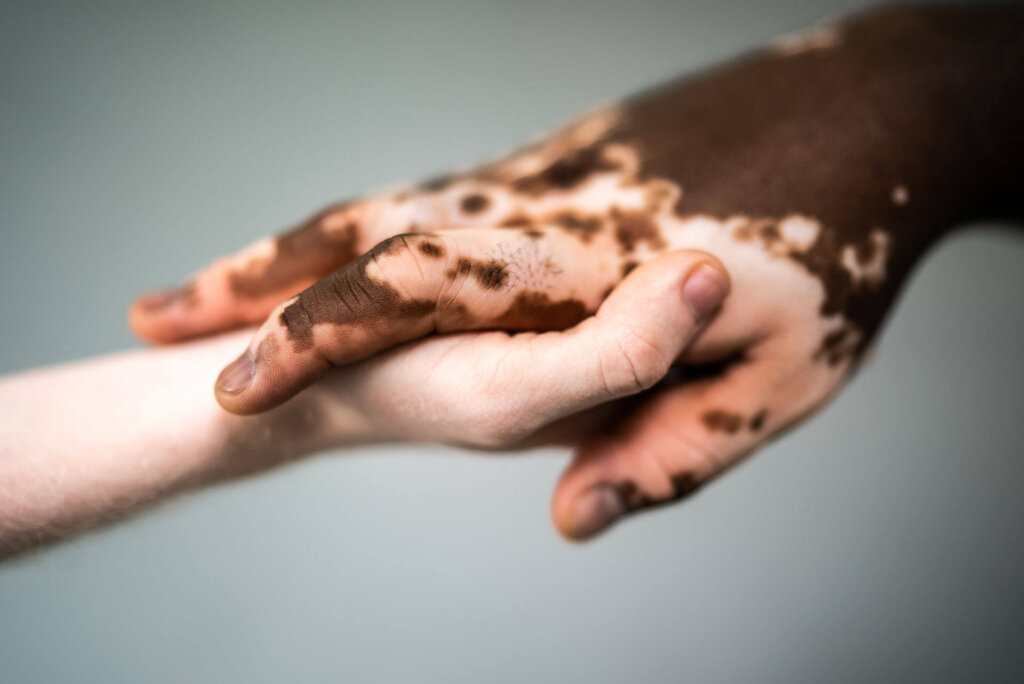
The Vitiligo Society of Kenya estimates that around one million Kenyans are living with the condition. 26-year-old biomedical engineer and model, Phelix Owiny is one of that million, and he joined us to talk about his long path to self-acceptance.
When he was just eight years old Phelix began to notice white patches on his lips. It wasn’t until two years later when he saw white on his neck and intimate areas that a formal diagnosis of vitiligo was made. For Phelix it was a ‘confusing and frightening’ period. One of the hardest moments being told that there was no cure.
Desperate, his parents did everything they could to find a treatment, from medications to more traditional remedies. When nothing was particularly effective, it only compounded immense emotional and financial strain on the family. After extensive research, Phelix discovered that even an extensive skin graft being offered may not reduce the likelihood that his vitiligo could continue to spread elsewhere. It was at this moment that Phelix made the decision to stop chasing treatment altogether.
“I chose acceptance and focused on learning on how to live confidently with vitiligo. This decision became a turning point in my life,” he says.
This path to acceptance wasn’t easy. Despite studies showing the psychological impact of vitiligo emerging in the early 2000s, Phelix still found that his doctors focused on treating the physical symptoms of the condition, not the emotional aspect of everything he was going through. “There was very little awareness or emotional support… Looking back, my family and I were largely navigating the journey on our own.”
School was difficult. For a child who loved music and drama, Phelix found that the more visible his vitiligo became, the more he was restricted by teachers, who refused to let him perform. Friends and distant family members distanced themselves and made hurtful assumptions about the condition. Relationships were hard. “Explaining the condition, especially when patches appear in private areas, can be emotionally exhausting.”
Struggling with low self-esteem and confidence due to the stigma of the condition in Kenya, he sought the support of mental health professionals and vitiligo support groups. Overtime, this helped him to reach a point of self-acceptance with his vitiligo, and he now views it as a part of his identity. More than that, he says that vitiligo has shaped how he sees the world and inspired him to move into advocacy work. As one of the more prominent “vitiligans” on social media in Kenya, he uses his platform to educate, empower and bring awareness to this misunderstood condition. He still finds that people stare, however, but now instead of shying away, he smiles and is able to talk about his condition to the, mostly children, who ask.
When asked if things have improved for those with vitiligo in Kenya, Phelix acknowledges that progress has been made. “Doctors are more aware of the condition now,” he says. “They are more interested in learning what it is and how to treat it. There’s more education for dermatologists about vitiligo in Kenya now and more research into the condition and treatments.” Even at a governmental level, there is greater awareness and support. Vitiligo is now classified as a disability in Kenya and people living with the condition can access more support. One of these government initiatives is free sun protection, previously only available to those living with albinism, but now available to those with vitiligo whose depigmented patches are more prone to sun damage. This support can be difficult to access though, Phelix notes, as you need to register with the council which is not that easy for those living in rural areas.
When it comes to the mental health support he lacked during his adolescence, Phelix credits local support groups for helping provide access to free counselling to those struggling with their vitiligo. There is still work to be done though, he notes. “Especially in rural areas where people do not know anything about vitiligo.” He believes that more education is needed in schools, especially in more isolated areas of Kenya, and also increased visibility on social media. He hopes that his advocacy work will contribute to a future where people living with vitiligo are fully accepted without stigma. Where skin diversity is understood and celebrated by society and there is more representation in media and fashion to empower individuals to feel confident and valued. “I strongly believe that beauty has no skin tone, and everyone deserves to feel confident and valued.”
You can follow Phelix on Instagram here: https://www.instagram.com/kenyan.vitiligo.finest/
If you’d like to share your vitiligo story email mail@clinuvel.com