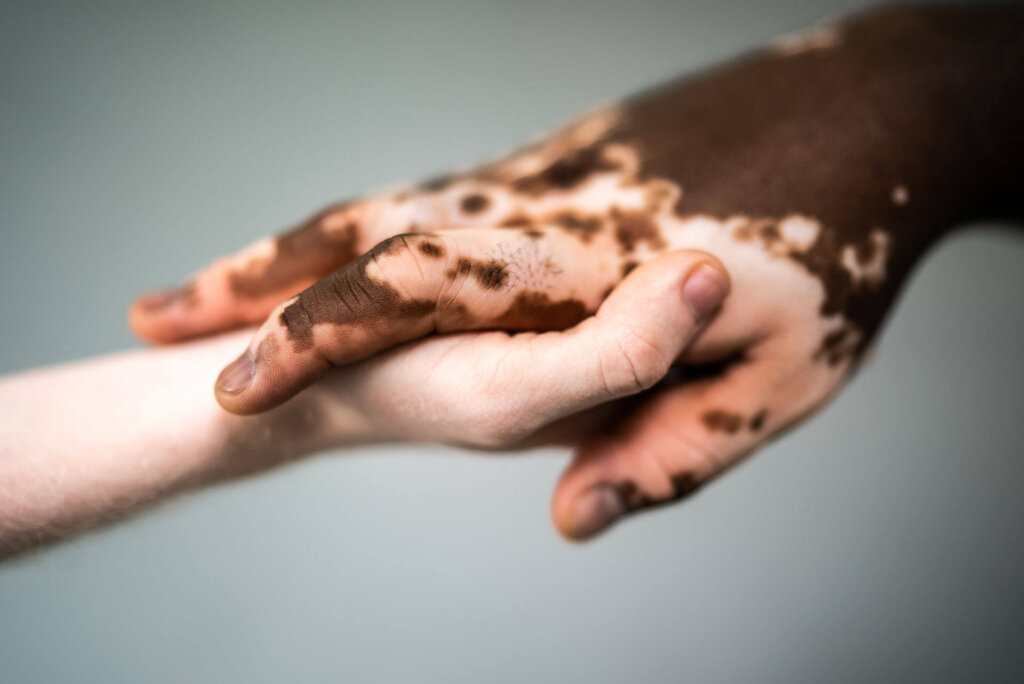
The UK version of the Netflix dating show Love Is Blind has recently aired its third season, featuring the first-ever contestant with vitiligo. Not familiar with it? Love Is Blind tests whether people can fall in love sight unseen, with contestants dating in pods and getting engaged before meeting face-to-face. While over 20 couples remain together worldwide, most relationships don’t make it to—or beyond—the altar.
For a community that has often been told, implicitly or otherwise, that visible difference is something to get past before you can be loved, this season alone is worth celebrating — seeing vitiligo on a mainstream dating show, without it becoming the focus of someone’s story, is the progress we have been working towards.
Yasmin Toseafa forms a connection in the show (“Pods” for those following closely) with Jordan Taylor and during one of their dates she discloses her vitiligo. She explains how she developed the condition as a child and spent years concealing it with makeup out of deep self-consciousness. Admitting that at her lowest point, her self-esteem was so impacted that she could not even open the door to the postman without covering her patches. While some might argue that disclosing a visible difference before meeting face-to-face goes against the show’s “blind” ethos, Yasmin’s choice actually reveals something profound about personal agency and how we talk about our bodies.
Vitiligo can carry a heavy psychosocial weight, particularly on darker skin types like Yasmin’s. Concealed vitiligo allows a person to disclose their condition on their own timeline, but when patches appear on the face or hands, visibility is immediate. That loss of control often triggers instant anxiety, putting individuals on the defensive as they feel pressured to explain, downplay, or reassure others about their own appearance. Research on visible differences shows that people who feel compelled to explain their physical appearance report higher levels of stigma, anxiety, and depression. Conversely, those who talk about their condition on their own terms experience significantly better outcomes, including higher self-worth
By choosing to share her condition in the pods, Yasmin reclaimed control over her narrative. This moment mirrors a broader evolution in societal acceptance: we are gradually moving away from the outdated expectation that individuals with visible differences owe potential partners a warning, an apology, or an explanation for their bodies. Society is learning that sharing a condition isn’t an act of seeking permission, it is an act of empowered boundary-setting and intimacy.
Yasmin’s story also highlights the lingering burden people with visible differences carry when navigating public spaces or meeting new people. A partner’s reassurance that “it doesn’t matter to me” does not automatically erase years of societal conditioning. This is precisely why accessible mental health support is essential for everyone with vitiligo, whether they choose to treat their skin, cover it, or wear it openly.
Ultimately, Yasmin’s moment on the show serves as a powerful reminder: your story belongs to you. True connection isn’t built on managing other people’s reactions to your skin, but on finding spaces where you feel safe enough to share on your own terms.
We’ll keep having these conversations — follow the Vitiligo Hub for more stories and perspectives like this one.