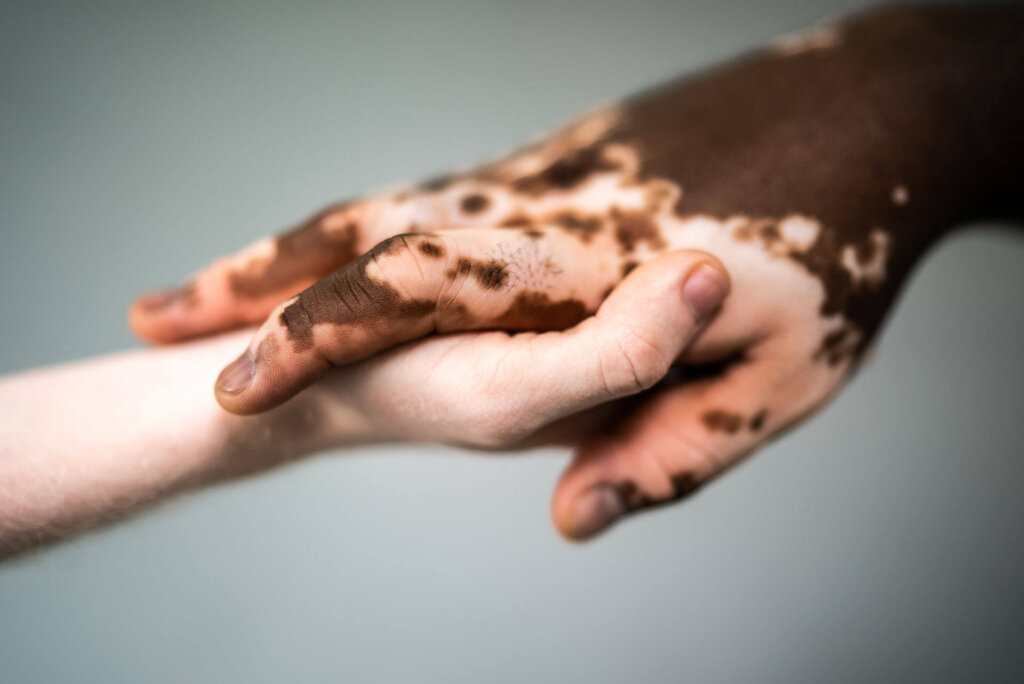
Imagine, you’re a first generation Pakistani Canadian and you lose the entirety of the pigment in your skin before puberty. That’s what happened to 26-year-old Shahnawaz Towheed, whose vitiligo spread so quickly and so vastly, that he was left completely pale by the age of 12.
Growing up in a small town, it was difficult for Shahnawaz to find support and answers to his condition. His family traveled multiple hours to Toronto, to SickKids Hospital where he was seen by Dr Bernice Krafchik, who would later inspire him to pursue a career in medicine with a view to specialising in dermatology. When it comes to treatment, they tried everything from topical creams and steroids to light therapy three times a week.
Speaking to Shahnawaz about his story, it’s clear that he was lucky to have such a supportive and understanding family. His father’s experience as a doctor helped them to understand the medical implications of the condition, but the psychosocial aspects could not be anticipated. While his family never made him feel like he was different, having to explain to the children in his class why his skin was different colours and why he was missing so much school (due to light therapy three times a week) was tough. “I didn’t have all the answers. They would ask me ‘are you going to lose all your skin colour?’ or ‘is that what Michael Jackson had?’ and I didn’t know what to say,” he says, adding, “It is hard because at that age we all just want to be accepted and fit in. You just want to play and not have to think about things like identity.”
Identity is a theme that comes up a lot in our conversation. As a Pakistani Canadian, losing his pigmentation affected the way he identified with his heritage. From relatives talking to him as if he were white to aunts being concerned about his future marriage prospects, Shahnawaz sometimes struggled in family settings. It made him feel isolated and left out, something that is echoed by others in a similar position. He says that it’s only upon reflection that he realises how much losing his pigment affected his sense of identity. How at the time he didn’t realise how much of your identity is tied to your skin colour.
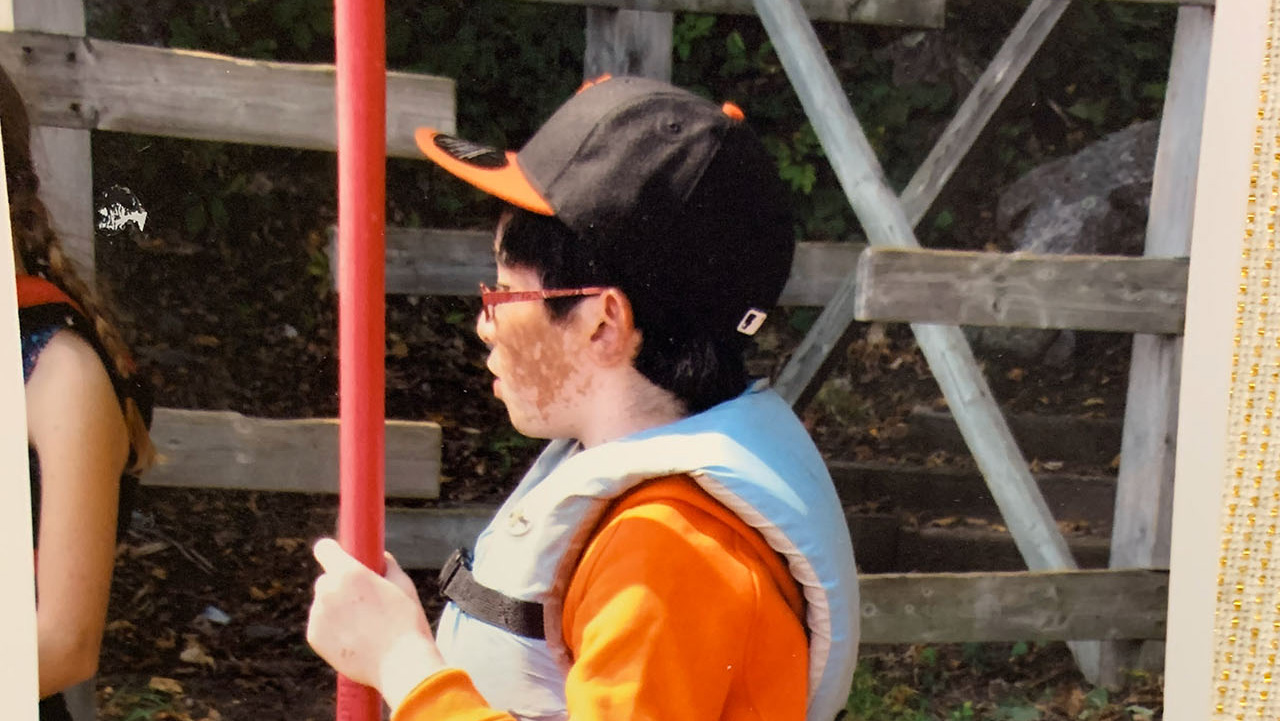
Shahnawaz canoeing as a child
His experiences with vitiligo and dermatologists, especially Dr Krafcik influenced his decision to apply to medical school after completing his undergraduate degree in psychology. He says the fact that she always appeared happy and liked to make jokes in order to put him and his family at ease, helped him see how influential doctors can be. “I thought that was really powerful because vitiligo is something that is so uncertain and there’s a lot of anxiety, not just for me, but for my parents too and it just made me feel like there’s such a healing role that doctors can have,” he says adding, “Now I’m at a point where I hope to turn my own setbacks and my own challenges into a service for other people. I think that a career in medicine, especially one that I can really resonate with in terms of treating the skin, is a huge motivator for me.”
When it comes to his studies and his hopes for the future of patient care, Shahnawaz is a keen advocate for psychodermatology and ensuring that people with visible skin differences have access to mental health support. He says, ‘I feel if there can be more of a compassionate and holistic approach to medicine as a whole, one that focuses on people’s stories not just their diagnosis, I think that would be an amazing thing to see.’
He is also working to support the vitiligo community in Canada by establishing the country’s first vitiligo advocacy group, Vitiligo Voices Canada. The organisation looks to amplify voices, reduce stigma, and provide community support as well as educating the general public about what vitiligo is and helping people become the best allies, they can be for those with vitiligo. Additionally, it holds monthly support group meetings where people across Canada can join, share stories and provide support to each other.
The future for Shahnawaz is a hopeful one. With Vitiligo Voices Canada he hopes to expand its outreach, making the support groups as accessible as possible especially to those who need them the most. For vitiligo, he hopes that the work being done to educate and raise awareness of the condition continues and that access to therapies for patients in Canada improves. He says, ‘Here accessing a dermatologist can be difficult and so how can we address the shortage and improve care and how can we ensure that people can access support services while they are waiting to see a doctor.’
Finally, I ask Shahnawaz what the one thing is he wishes people would understand about vitiligo. ‘That everyone’s journey is unique,’ he says, ‘Not everyone, for example, feels like they suffer with vitiligo. For some people, it’s just something they have and maybe they don’t think about it at all, whereas for others they’re thinking about it all the time and it’s the only thing they think about… There’s such a huge spectrum in terms of how it can affect people. So, it’s important that we don’t paint everyone with vitiligo with the same brush. Even for myself, I think in many ways I’m grateful for vitiligo because it’s given me opportunities. The only way you can really understand what the journey is for someone is by getting to know them.’
By Sarah Mawson